
Ear Reshaping: Discover Cosmetic Ear Surgery Benefits
Transform your appearance and self-esteem with ear reshaping surgery at estethica. Our expert surgeons offer personalized otoplasty procedures for natural and balanced results.
Understanding Ear Deformities and Their Impact
Recognizing Common Types of Ear Deformities
Ear deformities encompass a range of conditions, varying significantly in their appearance and impact on an individual’s life. Protruding ears, often referred to as "bat ears," are one of the most common concerns, where the ears extend noticeably outward from the head. This condition is typically caused by an underdevelopment of the antihelical fold, a natural crease in the ear cartilage. Macrotia involves abnormally large ears that are disproportionate to the head and face. Stahl's ear presents a pointed or constricted shape due to an abnormal fold of cartilage. These deformities can be present at birth or may arise later due to trauma or injury. Each type requires careful evaluation to determine the most effective treatment approach. estethica's specialists are adept at diagnosing and addressing a wide spectrum of ear deformities, providing personalized care to meet each patient's unique needs.
- Protruding Ears: Characterized by excessive projection from the head, often addressed with Otoplasty or ear pinning.
- Macrotia: Involves abnormally large ears, which can be corrected through ear reduction surgery at estethica.
- Stahl's Ear: Features a pointed or constricted shape, often requiring cartilage reshaping for correction.
The Psychological Effects and Benefits of Cosmetic Ear Surgery
The psychological impact of ear deformities can be profound, particularly during formative years. Children and teenagers with prominent or misshapen ears may face teasing, bullying, and social isolation, leading to decreased self-esteem and confidence. Adults, too, can experience self-consciousness and anxiety related to their appearance, which may affect their social interactions and overall quality of life. Corrective ear surgery offers a transformative solution, not only improving physical appearance but also boosting self-image and psychological well-being. By addressing these deformities, individuals can experience renewed confidence and a greater sense of self-acceptance. At estethica, the focus is on providing comprehensive care that addresses both the physical and emotional aspects of ear deformities, ensuring a positive and empowering experience for every patient.
- Improved Self-Esteem: Correcting ear deformities can significantly enhance an individual's confidence and self-perception.
- Reduced Social Anxiety: Addressing cosmetic concerns can alleviate anxiety related to appearance, promoting more comfortable social interactions.
- Enhanced Quality of Life: Increased self-assurance and reduced emotional distress contribute to an overall improvement in daily life.

Cosmetic Ear Surgery: Procedures and Techniques Explained
Techniques Used in Cosmetic Ear Surgery
Cosmetic ear surgery, also known as otoplasty, involves various procedures tailored to reshape and reposition the ears. The methods employed depend on the specific type and extent of the ear deformity. Ear pinning, a prevalent otoplasty technique, focuses on reshaping the cartilage to minimize the prominence of protruding ears. This can be achieved through methods like cartilage scoring and suturing to create a more natural fold. Ear reduction surgery addresses macrotia by excising excess cartilage and skin to decrease the overall ear size. Reconstructive techniques may be essential for correcting complex deformities or injuries. estethica utilizes cutting-edge surgical techniques and equipment to ensure precise and predictable results. Our surgeons are highly proficient in performing otoplasty on both children and adults, ensuring a safe and comfortable experience for all patients. We prioritize natural-looking results that harmonize with the individual's facial features, enhancing overall aesthetic balance.
- Ear Pinning: Reshapes cartilage to reduce the prominence of protruding ears, creating a more natural appearance.
- Ear Reduction Surgery: Removes excess cartilage and skin to reduce the size of abnormally large ears (macrotia).
- Reconstructive Techniques: Corrects complex deformities or injuries, restoring a more natural ear shape and function.
The estethica Approach to Otoplasty
At estethica, we are committed to providing exceptional care in cosmetic ear surgery. Our approach begins with a thorough consultation to understand each patient's unique concerns and goals. We meticulously assess the ear structure and discuss the most appropriate surgical techniques to achieve the desired outcome. Our skilled surgeons employ state-of-the-art methods to reshape and reposition the ears, ensuring natural-looking results that complement the patient's facial features. We prioritize patient safety and comfort throughout the entire process, from pre-operative planning to post-operative care. estethica's dedication to excellence and patient satisfaction makes us a leading choice for individuals seeking ear surgery. We aim to enhance not only the physical appearance but also the self-confidence and overall well-being of our patients.
- Comprehensive Consultation: Understanding patient goals and assessing ear structure to determine the best surgical approach.
- State-of-the-Art Techniques: Utilizing advanced surgical methods to reshape and reposition ears for natural-looking results.
- Prioritized Patient Care: Ensuring patient safety and comfort throughout the entire surgical journey, from consultation to recovery.
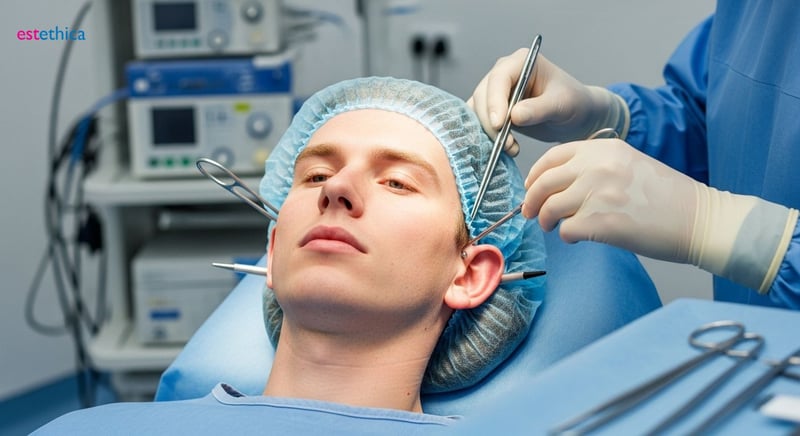
Pinnaplasty: Reshaping Protruding Ears for a Balanced Look
The Pinnaplasty Procedure: A Step-by-Step Overview
Pinnaplasty, a specialized form of otoplasty, is designed to correct protruding ears by bringing them closer to the head, enhancing facial harmony. The procedure typically begins with a small incision made behind the ear to access the cartilage. This strategic placement ensures that any resulting scar is discreetly hidden within the natural crease of the ear. Once the cartilage is exposed, the surgeon reshapes and repositions it using sutures to create or enhance the antihelical fold, which is often underdeveloped in individuals with protruding ears. In some instances, a small amount of cartilage may be removed to achieve the desired aesthetic outcome. The goal is to create a natural-looking contour that complements the patient's overall facial features. Pinnaplasty is suitable for both children and adults, with the approach tailored to the individual's specific anatomy and aesthetic goals. estethica's skilled surgeons prioritize precision and artistry, ensuring each patient achieves a balanced and pleasing result.
- Incision Placement: A small incision behind the ear ensures minimal visibility of any scarring.
- Cartilage Reshaping: Sutures are used to reshape and reposition the cartilage, creating a more natural fold.
- Customized Approach: Each procedure is tailored to the patient's unique ear anatomy and aesthetic goals.
Who is a Good Candidate for Pinnaplasty?
Determining candidacy for pinnaplasty involves several factors, primarily focusing on the individual's ear structure and aesthetic goals. Children as young as five years old, whose ear cartilage is stable enough for correction, can be considered for the procedure. Adults seeking to correct protruding or misshapen ears are also excellent candidates. Ideal candidates typically have good overall health and realistic expectations about the outcomes of the surgery. A thorough consultation with an experienced surgeon is essential to assess the individual's ear anatomy, discuss their aesthetic objectives, and determine the most appropriate surgical approach. estethica's surgeons conduct comprehensive evaluations to ensure that each patient is well-informed and prepared for the procedure. Our commitment to patient care ensures that individuals receive personalized treatment plans tailored to their specific needs, resulting in natural-looking and harmonious outcomes.
- Age Considerations: Children (5+) and adults with stable ear cartilage are suitable candidates.
- Health Status: Good overall health is essential for a successful surgical outcome.
- Realistic Expectations: Understanding the achievable results and having realistic goals is important.

Otoplasty Recovery: What to Expect After Ear Surgery
Immediate Post-Operative Care Following Ear Surgery
The initial days following ear surgery are critical for a smooth and successful recovery. Immediately after the procedure, the ears are typically bandaged to provide support, minimize swelling, and protect the surgical site. These bandages play a crucial role in maintaining the newly shaped ear contours. Patients may experience some discomfort, which can be effectively managed with prescribed pain medication. It is essential to keep the head elevated during this period to further reduce swelling. Regular monitoring of the incision sites for any signs of infection, such as increased redness or discharge, is also vital. estethica provides detailed post-operative instructions to ensure patients are well-equipped to manage their recovery at home. Our dedicated team remains available to address any concerns and provide guidance throughout this initial healing phase. Proper care during this time sets the stage for optimal long-term results following otoplasty.
- Bandaging: Provides support and minimizes swelling to maintain new ear contours.
- Pain Management: Prescribed medication helps manage discomfort during the initial healing phase.
- Elevation: Keeping the head elevated reduces swelling and promotes faster recovery.
Long-Term Recovery and Maintaining Results After Otoplasty
Long-term recovery after otoplasty involves several key steps to ensure lasting results and minimize complications. Typically, bandages are removed after about a week, and a lighter headband is worn for several weeks to maintain the new ear shape, especially during sleep. Avoiding strenuous activities and contact sports is crucial for several months to prevent trauma to the ears. Regular follow-up appointments with the surgeon are essential to monitor healing and address any concerns. While swelling and bruising are common initially, they gradually subside over time, revealing the final ear shape. Consistent care and adherence to post-operative instructions are vital for preserving the aesthetic outcome. estethica provides ongoing support and guidance to help patients navigate their long-term recovery. Our commitment is to ensure that each patient enjoys the full benefits of their ear surgery, with results that enhance their appearance and boost their confidence for years to come. The result of otoplasty will be better with otoplasty recovery.
- Headband Use: Wearing a headband maintains the new ear shape during the initial weeks of recovery.
- Activity Restrictions: Avoiding strenuous activities prevents trauma to the ears and ensures proper healing.
- Follow-Up Appointments: Regular check-ups monitor healing and address any concerns.
Understanding Otoplasty: A Comprehensive Guide
Suture-Based Cartilage Reshaping for Natural-Looking Otoplasty Results
Personalized Treatment Plans for Optimal Otoplasty Recovery
Frequently Asked Questions
What is Otoplasty, and who is a good candidate for Ear Reshaping?
What are the different techniques used in Cosmetic Ear Surgery?
What can I expect during the Otoplasty recovery process?
How does Pinnaplasty correct protruding ears for a balanced look?
What factors should I consider when choosing the Best Otoplasty Surgeon?
Achieve your aesthetic goals with estethica's personalized treatments and expert care.
📞 Book Your Free Consultation!