


Compare Invisalign vs traditional braces to find the right orthodontic treatment. Learn about effectiveness, duration, and benefits for your dental health.
Invisalign vs traditional braces represents the primary choice in orthodontic treatment for correcting dental malocclusion through either removable clear aligners or fixed metal appliances. Both methods use biomechanical force to achieve tooth movement, though they differ in their application, patient requirements, and daily maintenance protocols. Understanding these differences is essential for individuals seeking effective orthodontic correction to improve their dental alignment and overall oral health.
Understanding the Core Differences Between Invisalign and Traditional Metal Braces
Orthodontic treatment relies on applying consistent, controlled pressure to guide teeth into their ideal alignment. Traditional metal braces use a time-tested system of brackets and archwires to exert this force, making them a highly reliable option for correcting complex malocclusions, severe crowding, or significant tooth rotations. Many patients choose this method at estethica Global because of its proven track record in handling complex structural adjustments that require precise mechanical control throughout the duration of the care plan.
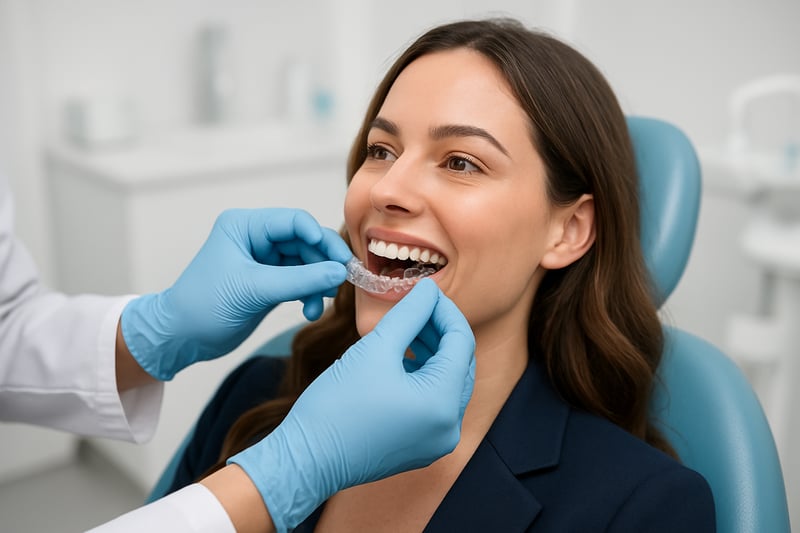
Clear aligner therapy offers a modern, discreet alternative by using a series of custom-made, removable thermoplastic trays. These aligners apply gentle, intermittent pressure to shift teeth gradually, providing a nearly invisible aesthetic that appeals to those achieving a natural look during their transformation. Clinical research summarizes that clear aligners can lead to shorter overall treatment times and fewer emergency dental visits compared to fixed metal appliances3, 5.
Patient compliance remains the most significant variable in determining the success of clear aligner therapy, as the trays must be worn for the majority of the day to be effective. While fixed braces operate continuously regardless of patient habits, aligners require the wearer to be diligent about daily cleaning and consistent use. Choosing between these options involves weighing the specific dental needs of the patient against lifestyle preferences and the desired level of invisibility during the adjustment period4.
Evaluating the Treatment Duration and Effectiveness of Clear Aligners
Clear aligners often provide a faster route to a straighter smile compared to traditional metal braces. Clinical data indicates that patients using clear aligner therapy frequently achieve their desired results in less time, with some studies showing an average duration of 14.5 months compared to 16.2 months for fixed appliances4. This efficiency stems from advanced digital modeling that maps out each tooth movement with high precision before the treatment begins.
Patients benefit from fewer clinical visits and a notable reduction in emergency appointments when choosing aligner systems over conventional hardware5. Because the treatment plan is mapped out digitally from the start, clinicians at estethica Global can provide a clear roadmap for tooth alignment, which helps in maintaining a predictable and simplify timeline for the patient. While aligners are highly effective for many, the overall success of the process relies heavily on the patient's commitment to wearing the trays for the recommended 20 to 22 hours per day.
Factors Impacting Orthodontic Efficiency
Individual case complexity remains the most significant variable in determining total treatment time. Simple malocclusions often resolve quickly with aligners, whereas severe bite corrections or complex rotations may occasionally require the mechanical force of traditional braces to achieve the most stable result within a specific timeframe1. Consistent wear is the primary factor in ensuring that the teeth move according to the planned schedule, as deviations from the daily wear requirements can prolong the duration of the entire orthodontic journey.
Key Advantages and Limitations of Choosing Estethica Global Invisalign Treatment
Patients choosing estethica Global for clear aligner therapy benefit from a modern approach to orthodontics that prioritizes both discretion and clinical efficiency. These aligners are virtually invisible, allowing individuals to undergo teeth straightening without the social impact associated with traditional metal hardware. Research indicates that patients using clear aligners often report higher satisfaction levels, with approximately 85% expressing high approval compared to 65% of those treated with fixed appliances4.
Beyond aesthetics, the clinical workflow at estethica Global emphasizes convenience and reduced chair time for the patient. Studies consistently show that aligner therapy results in fewer emergency visits and a lower total number of appointments compared to conventional braces5. This simplify process is particularly beneficial for those seeking an efficient path to a straighter smile, as clear aligners can often provide a shorter overall treatment duration than fixed appliances3.
Comparison of Orthodontic Solutions
Selecting the right treatment depends on individual lifestyle requirements and the complexity of the dental correction needed. The following table highlights the primary distinctions between clear aligners and traditional metal braces to assist in your decision-making process.
| Name | Key Features | Pros | Cons |
|---|---|---|---|
| Invisalign | Removable, clear plastic trays | Discreet, easy hygiene, fewer visits | Requires strict patient compliance |
| Traditional Braces | Fixed metal brackets and wires | Effective for complex movements | Visible, harder to clean teeth |
| Lingual Braces | Brackets attached to back of teeth | Hidden from view | Can cause speech discomfort |
Successful outcomes with aligners depend heavily on patient discipline, as the trays must be worn for the majority of the day to ensure consistent tooth movement. While clear aligners offer significant advantages, patients should consult with an expert at estethica Global to determine if their specific case is better suited for aligners or if traditional methods are required for complex malocclusions. Those interested in broader aesthetic improvements may also explore other beauty enhancements to complement their new smile.
Determining the Best Orthodontic Solution for Your Specific Dental Needs
Selecting the ideal orthodontic path begins with a precise evaluation of your dental anatomy and bite classification. At estethica Global, specialists use advanced cephalometric analysis to identify the biomechanical requirements for your unique malocclusion, ensuring that the chosen method effectively achieves optimal occlusal function and long-term periodontal health. Data indicates that while both methods are highly effective, treatment timelines can vary based on the complexity of the case2, 5.
Clear aligners often appeal to patients prioritizing discretion and convenience, frequently resulting in fewer emergency visits compared to fixed metal appliances5. Clinical studies have shown that patients using aligners may experience shorter overall treatment durations in specific malocclusion scenarios3, 4. Conversely, traditional braces remain a highly reliable standard for correcting severe structural misalignments that require consistent, high-intensity force application throughout the entire treatment period.
Comparing Orthodontic Modalities
The choice between aligners and traditional braces involves balancing lifestyle preferences with clinical necessity. estethica Global provides a thorough assessment to ensure your orthodontic journey match your aesthetic goals and oral health requirements, considering factors such as patient compliance and the severity of the dental crowding.
Personalized planning at estethica Global ensures that every patient receives a tailored approach, whether they require the constant mechanical force of braces or the flexible, aesthetic nature of clear aligner therapy. High patient satisfaction rates are consistently reported across both treatment modalities when the clinical plan is followed precisely under professional supervision4.

Orthodontic Technology Selection and Clinical Application
Follow-up Protocols and Realistic Expectations
Frequently Asked Questions
Are there specific dental conditions that make a patient ineligible for Invisalign versus traditional braces?
What preparation steps are necessary before beginning orthodontic treatment with either system?
How does long-term retention differ after completing Invisalign treatment compared to traditional braces?
Is it a misconception that orthodontic treatment is only effective during childhood or adolescence?
What are the primary differences between clear aligners and lingual braces as an alternative orthodontic solution?

Which Orthodontic Path is Right for You?
Compare Invisalign and traditional braces with expert guidance tailored to your unique smile needs.
References
Superscript numbers in the content correspond to the references listed below.
- PubMed Central (PMC) — Differences in finished case quality between Invisalign and traditional fixed appliances: A randomized controlled trial - PMC
- PubMed Central (PMC) — Comparative Analysis of Braces and Aligners: Long-Term Orthodontic Outcomes - PMC
- PubMed Central (PMC) — A comparison of treatment effectiveness between clear aligner and fixed appliance therapies - PMC
- PubMed Central (PMC) — A Comparative Study on the Efficiency of Clear Aligners Versus Conventional Braces in Adult Orthodontic Patients - PMC
- PubMed Central (PMC) — Outcome assessment of orthodontic clear aligner vs fixed appliance treatment in a teenage population with mild malocclusions - PMC