


Compare invisalign vs braces to find the right orthodontic treatment. Learn about effectiveness, aesthetics, and expert consultation at estethica Global.
Invisalign vs braces represents the primary choice in orthodontic treatment, involving either removable clear aligners or fixed appliances to correct dental malocclusion. Both methods use biomechanical force to achieve tooth movement, though they differ in their application, aesthetic impact, and daily maintenance requirements. Understanding these differences is essential for patients seeking effective dental alignment correction.
Understanding the Core Differences Between Invisalign and Traditional Braces
Orthodontic correction relies on applying consistent, controlled pressure to teeth to guide them into proper alignment. Traditional fixed appliances, commonly known as metal braces, use brackets bonded to the teeth connected by archwires to exert continuous force through the periodontal ligament. This mechanical approach is highly effective for complex cases, such as severe crowding or significant bite discrepancies, where precise control over individual tooth roots is required.
Clear aligner therapy offers an alternative through a series of custom-made, removable thermoplastic trays. Patients wear each set for a specific period, with every tray designed to move teeth incrementally toward the desired position. Recent clinical studies indicate that for mild malocclusions, this clear aligner therapy often results in shorter treatment times and fewer emergency visits compared to traditional fixed appliances1.
Orthodontic Treatment Comparison
| Name | Key Features | Pros | Cons |
|---|---|---|---|
| Traditional Braces | Metal brackets and archwires | Highly effective for severe cases | Visible, dietary restrictions |
| Invisalign | Removable thermoplastic trays | Nearly invisible, hygienic | Requires high patient compliance |
| Ceramic Braces | Tooth-colored brackets | Less visible than metal | Brackets can be brittle |
| Lingual Braces | Brackets placed behind teeth | Completely hidden from view | Can affect speech/comfort |
Selecting the right method involves evaluating lifestyle needs alongside clinical requirements. estethica Global provides personalized consultations to assess the complexity of the malocclusion and determine if the patient is a candidate for removable aligners or if fixed hardware is necessary to achieve optimal results. Professional guidance ensures that the chosen orthodontic path remains safe, efficient, and sustainable for the patient's long-term dental health.

Evaluating Treatment Speed and Effectiveness for Adult Patients
Adult patients frequently weigh the speed of orthodontic correction against the visibility of the appliance. Research indicates that for mild malocclusions, clear aligner therapy can sometimes result in shorter overall treatment times compared to fixed appliances1, though this efficiency relies heavily on the patient wearing the trays for at least 22 hours daily. When comparing invisalign versus traditional braces, the primary factor determining speed is the complexity of the tooth movement required to achieve a functional bite.
Fixed appliances remain the gold standard for complex cases involving significant skeletal discrepancies or multi-directional tooth rotation. Orthodontists often use cephalometric analysis to map the most efficient path for correction, ensuring that the biological process of bone remodeling remains stable regardless of the hardware used. Consistent force application is the critical driver of success, necessitating regular check-ups at estethica Global to monitor progress and adjust the treatment plan as the teeth shift into their target positions.
Comparison of Orthodontic Modalities
Clinical Considerations for Adult Outcomes
Aesthetics and convenience often dictate the patient’s choice, but clinical effectiveness must remain the priority for long-term oral health. Interproximal reduction may be necessary for both aligners and fixed brackets to create sufficient arch space, ensuring that the final alignment is both stable and aesthetically pleasing. estethica Global emphasizes that successful outcomes depend on the patient's commitment to the prescribed wear schedule and their diligence in maintaining hygiene during the entire course of treatment.
Expert Consultation Insights at Estethica Global
Professional guidance serves as the cornerstone of a successful orthodontic journey at estethica Global. Each consultation begins with a thorough dental examination, incorporating advanced digital imaging and a thorough review of the patient's medical history to ensure that every treatment path remains both safe and highly effective. This diagnostic precision allows specialists to determine whether Invisalign or traditional metal braces provide the most suitable solution for individual dental needs.
Clear aligner therapy often helps support particularly efficient for patients seeking a discreet approach to dental correction. Clinical research indicates that for mild malocclusions, clear aligners can lead to improved tooth alignment and occlusal relations in shorter treatment times compared to fixed appliances, often requiring fewer emergency visits throughout the process1. Specialists at estethica Global use this contemporary data to tailor treatment plans that prioritize patient comfort and long-term oral health.
The Importance of Professional Assessment
Specialists at estethica Global evaluate the specific severity of a patient's malocclusion during the initial assessment to align expectations with realistic outcomes. using digital smile design technology, the dental team provides a visual preview of potential results, support a collaborative environment where patients feel enable in their decision-making process. Continuous monitoring from the moment of admission ensures that every phase of the alignment correction is managed with clinical transparency and expert oversight.
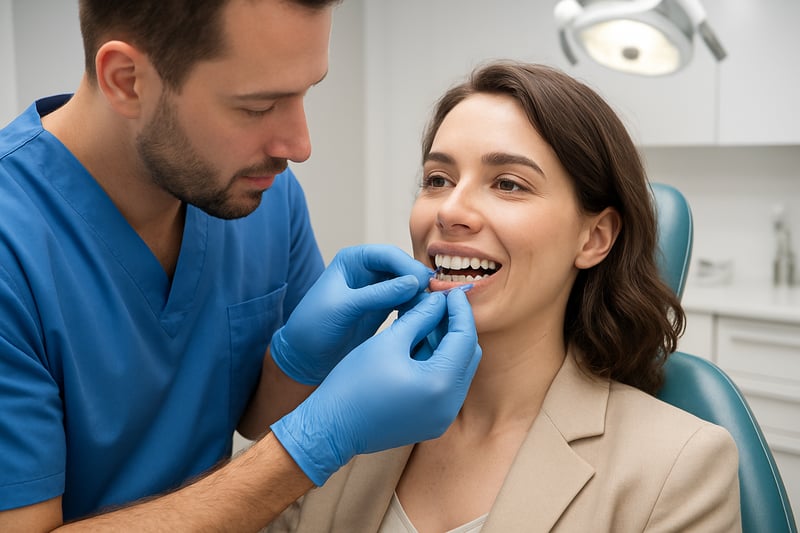
Weighing the Pros and Cons of Clear Aligners Versus Metal Braces
Clear aligners, such as those provided by estethica Global, offer a discreet orthodontic solution that allows patients to maintain their daily routine without the visual impact of traditional hardware. Because these trays are removable, individuals can brush and floss their teeth with ease, reducing the risk of plaque accumulation during treatment. Research indicates that for mild malocclusions, clear aligners can achieve superior tooth alignment and occlusal relations in a shorter timeframe compared to traditional systems, often requiring fewer emergency appointments1.
Metal braces remain a highly effective standard for correcting complex dental misalignments that require precise, constant force. Since these appliances are permanently bonded to the teeth, they eliminate the risk of non-compliance, ensuring that the treatment plan progresses exactly as scheduled without relying on the patient to remove or replace trays. While the brackets and wires may cause minor soft tissue irritation initially, they provide a reliable, time-tested approach for patients with severe bite issues or rotated teeth.
Analyzing Treatment Trade-offs
Selecting between clear aligners and metal braces depends largely on the specific complexity of your dental structure and your personal lifestyle habits. Clear aligners demand a high level of patient discipline, as the trays must be worn for approximately 22 hours per day to remain effective. Conversely, metal braces offer a hands-off experience regarding daily appliance management, though they do necessitate more frequent adjustments at the clinic to monitor progress and tighten wires.
Professional guidance from the orthodontic experts at estethica Global helps determine which system will best achieve your goal of improved occlusal function and long-term dental health. Both methods successfully address various forms of malocclusion, and the choice often comes down to balancing aesthetic preferences with the structural requirements of your smile. Regardless of the chosen path, consistent care and adherence to follow-up visits are essential for a successful outcome.

Orthodontic Technology and Treatment Modalities
Treatment Planning and Operational Standards
Frequently Asked Questions
Are there specific dental conditions that make someone ineligible for Invisalign vs braces?
What dental prerequisites should be completed before starting orthodontic treatment?
How does long-term aftercare differ for patients after finishing orthodontic treatment?
Is it true that orthodontic treatment causes permanent damage to tooth enamel?
What is the difference between standard retainers and fixed lingual retainers?

Which Treatment Is Best For Your Smile?
Not sure whether Invisalign or braces fit your lifestyle? Get a personalized recommendation from our expert team.
References
Superscript numbers in the content correspond to the references listed below.