


Learn about the nose surgery recovery timeline. Discover what to expect week by week, tips for reducing swelling, and when to safely resume physical activity.
The nose surgery recovery timeline is a structured healing process that typically spans several months, involving initial acute recovery followed by gradual tissue remodeling. Understanding these stages helps patients manage expectations regarding swelling, bruising, and the return to daily activities. This guide outlines the essential phases of post-operative care to ensure a smooth and successful healing journey.
The Complete Nose Surgery Recovery Timeline Week by Week
The initial phase of nose surgery recovery at estethica Global centers on managing post-operative congestion and facial swelling. Patients typically require one week away from professional or academic responsibilities, as nasal splints are generally removed at the end of this first week to improve comfort1. During this early stage, surgeons advise sleeping with the head improve and avoiding actions like blowing the nose to ensure proper healing of the cartilage and bone3.
Visible bruising around the eyes usually diminishes by the second week, allowing patients to resume most daily routines. Although external swelling fades, internal stiffness and mild numbness often persist, requiring patients to maintain a cautious approach toward physical exertion1. estethica Global specialists emphasize that strenuous exercise or contact sports must be avoided for at least four to six weeks to protect the structural integrity of the nose2.
Long-term recovery involves a gradual settling process where the final refinements of the nasal structure become apparent over several months. While most patients notice a significant reduction in swelling within two months, the underlying tissues continue to remodel for up to a year1. Maintaining consistent follow-up appointments with estethica Global ensures that each stage of this healing journey progresses according to the expected clinical timeline.

Essential Post-Operative Care Instructions for Estethica Global Patients
Following precise rhinoplasty post-op instructions is vital for achieving optimal results during nose surgery recovery. Patients are advised to keep their head improve, especially while sleeping, to minimize facial edema and reduce pressure at the surgical site3. This simple adjustment promotes faster drainage of fluids and protects the delicate nasal structures during the initial healing phase.
Maintaining nasal hygiene is a primary requirement for a successful outcome. Specialists at estethica Global recommend using saline nasal sprays to keep passages moist and prevent crusting, while strictly avoiding blowing the nose forcefully to protect healing bones and cartilage3. If sneezing occurs, patients must keep their mouth open to alleviate internal pressure and maintain the structural integrity of the nose.
Resuming daily activities requires a measured approach to ensure the long-term success of the procedure. Most patients should plan to take at least one week off from work or school, although full healing of bone and cartilage continues for several months1,3. Strenuous exercise and contact sports must be avoided for four to six weeks to prevent accidental impact to the recovering nose2.
estethica Global emphasizes the importance of attending all scheduled follow-up appointments to monitor progress and remove sutures safely. Consistent communication with the surgical team allows for the early identification of potential issues, ensuring a safer and more effective recovery experience for every patient.
Effective Strategies for Managing Pain and Reducing Swelling After Rhinoplasty
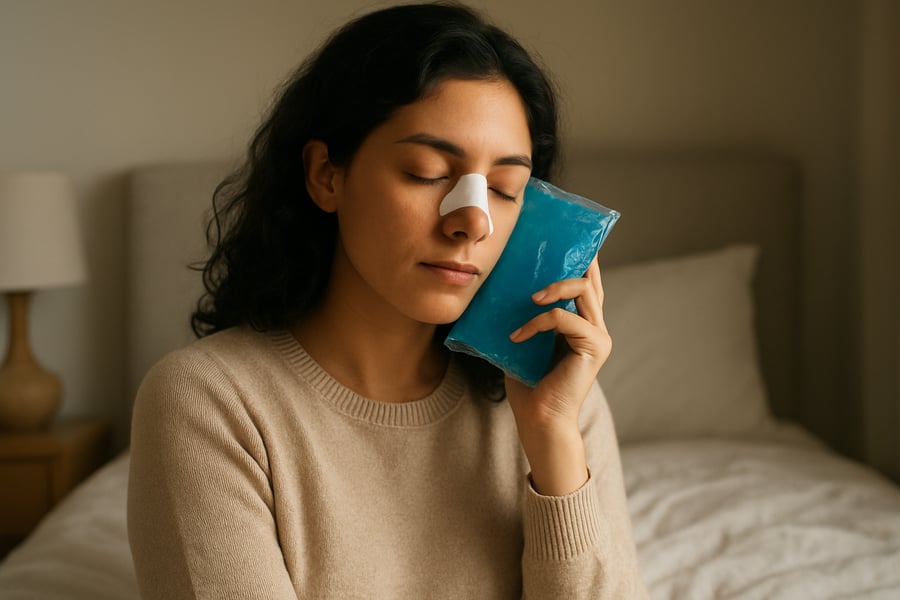
Nose surgery recovery requires consistent attention to physical comfort and inflammation control during the initial healing phase. Applying cold compresses to the cheeks helps minimize periorbital ecchymosis, though direct pressure on the nasal bridge must be strictly avoided to protect the structural integrity of the healing tissues. Patients often find that resting with the head improve reduces nasal congestion and facial pressure, especially during the first two weeks of the recovery period3.
Maintaining a dedicated post-operative schedule is essential for achieving the best aesthetic outcomes with estethica Global. Surgeons typically recommend avoiding strenuous activities and contact sports for four to six weeks to prevent accidental trauma to the sensitive bone and cartilage2. Staying well-hydrated and consuming a nutrient-dense diet supports the body's natural healing response while reducing the duration of residual edema.
Clear communication with the surgical team regarding medication schedules ensures that pain remains manageable throughout the transition from the hospital to home care. Most individuals feel significant improvement within one week, although full resolution of minor swelling can take several months to finalize1. Adhering to these professional guidelines helps simplify the recovery journey and allows for a more comfortable experience as the final results emerge.
Recovery Support Packages
When to Safely Resume Exercise and Physical Activity Post-Surgery
Physical activity during nose surgery recovery requires a cautious, phased approach to ensure the nasal structure remains stable while healing. During the first week, light walking promotes circulation, but any activity that increases heart rate or blood pressure must be avoided to prevent unnecessary swelling and potential bleeding at the surgical site. estethica Global recommends that patients prioritize rest during these initial days to allow the body to focus its energy on repair.
Most daily activities can be resumed after one week, but strenuous exercise or contact sports require a longer waiting period1. According to clinical guidelines, heavy lifting, bending over, or intense cardiovascular workouts should be avoided for at least 4 to 6 weeks to protect the nasal bones and cartilage while they continue to knit together2. Adhering to these limitations at estethica Global helps prevent complications that could arise from sudden physical strain or accidental impact.
Determining exactly when to resume specific fitness routines depends on individual healing progress and the surgical techniques used, such as whether an osteotomy was performed. Consulting with the surgical team at estethica Global allows for personalized guidance based on the patient's unique recovery milestones. Gradually reintroducing exercise ensures the body adapts without compromising the final aesthetic or functional outcome of the nose surgery.
Post-Operative Physical Precautions
Patients should avoid blowing their nose or sneezing with a closed mouth during the first two weeks to prevent pressure changes within the nasal cavity3. Sleeping with the head improve is equally important to minimize swelling and support the structural integrity of the nose during the early stages of recovery. Following these specific post-operative instructions from estethica Global ensures a smoother transition back to a regular lifestyle.
Understanding the Nasal Splint Removal Process and Long-Term Healing
The removal of the nasal splint typically occurs about one week after nose surgery, marking a significant step toward comfort. During this appointment at estethica Global, the surgeon carefully removes the splint to assess the initial alignment of the nasal bones and cartilage. This transition provides immediate relief from the physical pressure on the bridge of the nose and allows patients to see the foundational results of their procedure1.
Healing of the bone and cartilage continues well beyond the initial week, requiring patience as internal tissues stabilize over several months3. While most individuals feel like themselves again within a week, internal edema often persists and requires time to resolve completely1. estethica Global emphasizes that while external swelling diminishes quickly, the final structural refinement of the nasal tip is a gradual process that can take up to a year to fully manifest2.
Protecting the skin from UV exposure is essential during the long-term recovery phase to prevent permanent hyperpigmentation of surgical sites. Wearing a hat or applying high-SPF sunscreen helps maintain the integrity of the healing tissue as it matures. By adhering to these aftercare protocols, patients ensure that the aesthetic and functional improvements provided by estethica Global are preserved throughout the entire healing journey.

Surgical Methods and Recovery Protocols
Evaluation, Planning, and Follow-up
Frequently Asked Questions
Who is not considered an ideal candidate for nose surgery?
What specific pre-operative steps should patients take to prepare for their nose surgery recovery timeline?
Is it true that wearing glasses after nose surgery is strictly prohibited?
When can I safely resume intense physical activity after my procedure?
What are common misconceptions regarding the final results of rhinoplasty?

Ready to Plan Your Recovery Journey?
Get personalized insights and professional guidance for your rhinoplasty recovery from the estethica Global team.
References
Superscript numbers in the content correspond to the references listed below.
- Mayo Clinic — Rhinoplasty - Mayo Clinic
- NHS — Nose reshaping (rhinoplasty) - NHS
- Cleveland Clinic — Septoplasty: Procedure & Recovery - Cleveland Clinic