


Discover effective hair restoration solutions at estethica. Learn about hair transplant techniques and regain your natural hairline.
Hair loss can be a distressing experience, affecting self-esteem and confidence. Fortunately, advancements in medical science offer effective solutions through hair restoration techniques. Understanding the causes of hair loss and the various treatment options available is the first step towards regaining a full head of hair. This guide explores the intricacies of hair restoration, from identifying the root causes of hair loss to delving into the details of hair transplant procedures and ensuring long-lasting results. Whether you're just beginning to explore your options or are ready to take the next step, this comprehensive overview will provide you with the knowledge you need to make informed decisions about your hair restoration journey, potentially with the expertise available at estethica.Understanding Hair Loss: Identifying the Root Causes
Exploring the Multifaceted Causes of Hair Loss
Hair loss, clinically known as alopecia, arises from a complex interplay of factors. Identifying these underlying causes is paramount for devising effective hair loss treatment strategies. While genetic predisposition, often manifested as androgenetic alopecia, plays a significant role, hormonal imbalances can also trigger hair thinning. Conditions such as thyroid disorders and autoimmune diseases disrupt the hair growth cycle, leading to increased shedding. Furthermore, nutritional deficiencies, particularly in iron and vitamin D, can compromise hair health. External factors like certain medications, chronic stress, and traction alopecia from tight hairstyles further contribute to the problem. A precise diagnosis, incorporating a thorough medical history and examination, is essential to tailor the most appropriate treatment plan. Este hair clinic employs advanced diagnostic technologies to pinpoint the specific factors contributing to your hair loss, paving the way for personalized and effective hair restoration. This comprehensive assessment ensures a targeted approach, maximizing the chances of successful hair regrowth and preventing future hair loss. Hair transplant options may also be explored based on the diagnosis.
Diagnostic Approaches for Hair Loss Identification
Pinpointing the exact cause of hair loss necessitates a multi-faceted diagnostic approach. This begins with a detailed review of the patient's medical history, encompassing family history of hair loss, existing medical conditions, and current medications. Physical examination of the scalp and hair provides valuable insights into the pattern and extent of hair loss. Blood tests are often conducted to assess hormonal levels, thyroid function, and nutritional status. In some cases, a scalp biopsy may be necessary to examine the hair follicles under a microscope, ruling out inflammatory or infectious conditions. Advanced diagnostic tools, such as trichoscopy, allow for non-invasive visualization of the scalp and hair shafts, aiding in the identification of subtle abnormalities. At Este hair clinic, our experienced team combines these diagnostic modalities to formulate an accurate diagnosis and develop a personalized hair restoration plan. Understanding the root cause of hair loss is crucial for selecting the most effective treatment, whether it involves medical therapies, lifestyle modifications, or surgical interventions like hair transplant. The clinic hair experts are ready to help you.

Hair Transplant Techniques: FUT vs. FUE - Which is Right for You?
Decoding FUT and FUE: Understanding the Core Differences
When exploring hair transplant options, it's essential to understand the fundamental distinctions between Follicular Unit Transplantation (FUT) and Follicular Unit Extraction (FUE). FUT, often referred to as strip harvesting, involves surgically removing a strip of scalp from the donor area, typically the back of the head. This strip is then meticulously dissected into individual follicular units, which are subsequently transplanted to the recipient area. FUE, conversely, employs a specialized punch tool to extract individual hair follicles directly from the donor area, leaving behind tiny, circular incisions. A key difference lies in the invasiveness of the procedures; FUT involves a larger incision, resulting in a linear scar, while FUE leaves multiple, less noticeable dot-like scars. The choice between FUT and FUE depends on various factors, including the extent of hair loss, the patient's scalp laxity, and their tolerance for scarring. At estethica, our skilled surgeons carefully assess each patient's unique needs to determine the most suitable technique for achieving optimal results. Our expertise extends to advanced methods like DHI and Sapphire FUE, ensuring a comprehensive range of options for personalized hair restoration. The hair transplant procedure is a delicate process.
- FUT (Follicular Unit Transplantation): Involves removing a strip of scalp, resulting in a linear scar but allowing for a large number of grafts in one session.
- FUE (Follicular Unit Extraction): Extracts individual follicles, leaving minimal dot-like scars, but may be more time-consuming.
- DHI (Direct Hair Implantation): Is a modern technique for advanced and effective solutions.
Choosing the Right Technique: Factors to Consider
Selecting the optimal hair transplant technique requires careful consideration of several factors. The extent of hair loss and the desired density play a crucial role in determining whether FUT or FUE is more appropriate. FUT is often preferred for individuals requiring a large number of grafts to cover extensive baldness, while FUE may be suitable for those with smaller areas of hair loss or who prefer to avoid a linear scar. Scalp laxity, or the elasticity of the scalp, is another important consideration, as it can affect the ease of strip harvesting in FUT. Personal preferences regarding scarring and downtime also influence the decision-making process. Furthermore, advancements in FUE techniques, such as Sapphire FUE, have enhanced precision and minimized scarring. At estethica, our experienced surgeons conduct a thorough consultation to assess each patient's individual needs and goals, providing personalized recommendations for the most effective hair restoration approach. We also consider factors such as hairline design and donor area characteristics to ensure natural-looking and long-lasting results. The hair transplant is a safe procedure.
- Initial Consultation: A comprehensive assessment of hair loss extent, scalp condition, and patient expectations.
- Technique Recommendation: Based on the assessment, the surgeon recommends either FUT or FUE, explaining the pros and cons of each.
- Personalized Planning: Tailoring the approach to achieve natural-looking results, considering hairline design and donor area characteristics.
The Art of Hairline Design: Crafting a Natural Look
The Importance of a Natural Hairline in Hair Restoration
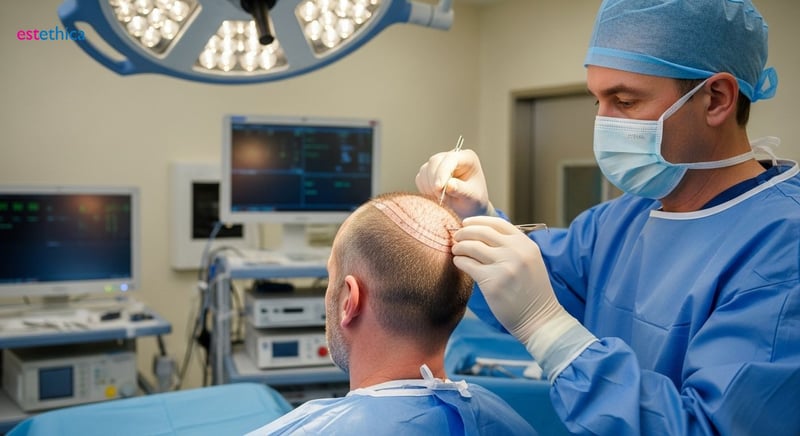
A natural-looking hairline is paramount in achieving a successful hair transplant. The hairline's design must harmonize with your facial structure, age, and individual aesthetic aspirations. Surgeons meticulously consider factors such as forehead shape, existing hair density, and the hairline's natural curvature. Furthermore, they anticipate potential future hair loss patterns to ensure the transplanted hairline retains its natural appearance over time. Creating a feathered, irregular edge that replicates natural hair growth is crucial in hairline design. This technique prevents the artificial and harsh look often associated with poorly designed hairlines. At estethica, our proficient surgeons possess a refined aesthetic sense and a comprehensive understanding of facial anatomy. They collaborate closely with each patient to craft a hairline that seamlessly integrates with their current hair, enhancing their overall look. Our dedication to achieving natural-looking results is evident in every hair transplant we perform, guaranteeing patient satisfaction and confidence. This includes considering various non surgical hair restoration options.
Key Considerations in Hairline Design
Designing a natural-looking hairline involves several critical considerations. The surgeon must analyze the patient's facial features, including the shape of the forehead, the position of the eyebrows, and the overall symmetry of the face. The hairline should complement these features, creating a balanced and harmonious appearance. The angle of hair emergence is also crucial; hairs should exit the scalp at a natural angle to avoid a plug-like appearance. Density distribution is another important factor, with the highest density typically concentrated in the central part of the hairline and gradually decreasing towards the temples. Furthermore, the surgeon must account for the patient's age and anticipated future hair loss patterns. At estethica, our surgeons employ advanced techniques to create hairlines that not only look natural but also withstand the test of time. We utilize single-hair follicular units to create a soft, feathered edge, and we carefully distribute the grafts to mimic natural hair density. Our commitment to excellence ensures that each patient receives a personalized hairline design that enhances their overall appearance and boosts their self-confidence. This meticulous approach sets us apart as a leading provider of hair transplant and hair restoration services. The hair transplant procedure uses the fue sapphire technique.
- Facial Harmony: Ensuring the hairline complements the patient's facial features for a balanced aesthetic.
- Angle of Emergence: Precisely angling hair grafts to mimic natural hair growth patterns.
- Density Distribution: Strategically distributing hair density for a realistic and natural appearance.
- Initial Consultation: Assessing facial features, hair loss patterns, and patient expectations.
- Hairline Design: Creating a personalized hairline plan that complements the patient's unique features.
- Graft Placement: Meticulously placing individual hair grafts to achieve a natural-looking hairline.

Long-Term Hair Restoration: Ensuring Lasting Results
Sustaining Hair Density Post-Transplant: A Lifelong Commitment
While a hair transplant offers a transformative solution for hair loss, achieving lasting results necessitates ongoing care and maintenance. The transplanted hair follicles, inherently resistant to DHT, ensure permanence. However, the surrounding non-transplanted hair may continue to thin due to genetic predispositions or other factors. To combat this, integrating medical therapies like minoxidil and finasteride into your routine can prove invaluable. These medications help fortify existing hair, slowing down further hair loss. Regular check-ups with your hair restoration specialist are equally important, allowing for progress monitoring and timely intervention. For instance, adjustments to medication dosages or the introduction of new therapies can optimize outcomes. estethica is committed to providing comprehensive post-transplant care, including personalized treatment strategies and continuous support, ensuring you enjoy a full, healthy head of hair for years to come. This commitment extends to offering supportive services like PRP treatment to enhance hair growth and scalp health. The hair transplant procedure is the start of a new era.
- Medical Therapies: Incorporating minoxidil and finasteride to maintain hair density and prevent further hair loss.
- Regular Follow-ups: Attending scheduled appointments for progress monitoring and adjustments to treatment plans.
- Supportive Services: Utilizing PRP treatment to optimize hair growth and overall scalp health.
Maximizing Longevity: Integrative Approaches to Hair Health
To ensure the longevity of your hair restoration results, adopting an integrative approach to hair loss treatment is essential. This encompasses not only medical therapies but also lifestyle adjustments and supportive treatments. A balanced diet rich in vitamins and minerals, particularly iron, zinc, and biotin, provides the building blocks for healthy hair growth. Stress management techniques, such as yoga and meditation, can mitigate the negative impact of stress on hair follicles. Furthermore, avoiding harsh chemicals and excessive heat styling can prevent damage to both transplanted and existing hair. Exploring options like low-level laser therapy (LLLT) can also stimulate hair follicles and promote growth. At estethica, we advocate for a holistic approach to hair restoration, combining cutting-edge treatments with personalized lifestyle recommendations. Our team of experts will guide you in developing a comprehensive plan that addresses all aspects of your hair health, ensuring you enjoy the benefits of your hair transplant for years to come. The hair transplant is a safe and effective procedure.
- Nutritional Optimization: Consuming a balanced diet rich in essential vitamins and minerals for hair health.
- Stress Management: Implementing techniques like yoga and meditation to reduce stress-related hair loss.
- Gentle Hair Care: Avoiding harsh chemicals and excessive heat styling to prevent damage to hair follicles.
Exploring Non-Surgical Hair Restoration Options
Understanding Non-Surgical Approaches to Hair Restoration
For those not suited for or preferring to avoid hair transplant, non-surgical hair restoration offers viable alternatives. These treatments aim to stimulate hair growth and enhance thickness without surgery. Minoxidil, applied topically, boosts blood flow to hair follicles, promoting growth. Finasteride, an oral medication, reduces DHT, a key cause of hair loss. Low-level laser therapy (LLLT) uses light to stimulate follicles, and platelet-rich plasma (PRP) involves injecting concentrated platelets from the patient's blood into the scalp to encourage hair growth and density. Each option has distinct benefits and limitations, and the best choice depends on individual hair loss causes and extent. Este hair clinic provides various non-surgical treatments, with our team assisting in selecting the most effective approach. We also offer vitamin and mineral supplements to support hair loss treatment and overall hair health.
- Topical Minoxidil: Enhances blood flow to hair follicles, promoting hair growth.
- Oral Finasteride: Reduces DHT production, a primary cause of hair loss.
- PRP Therapy: Involves injecting concentrated platelets to stimulate hair growth and density.
Personalized Non-Surgical Hair Restoration Strategies
Choosing the right non-surgical hair restoration method requires a personalized strategy. Minoxidil is often the first line of defense, effective for many in slowing hair loss and promoting regrowth. Finasteride is typically prescribed for men to combat hormonal hair loss, but requires careful consideration due to potential side effects. LLLT offers a non-invasive option with minimal side effects, making it suitable for regular use. PRP therapy, while more invasive, can provide significant improvements in hair density and growth. At estethica, our experts conduct a detailed assessment to determine the most suitable non-surgical approach. This includes evaluating the type and extent of hair loss, overall health, and individual preferences. We tailor treatment plans to address specific needs, often combining multiple therapies for enhanced results. Our goal is to provide effective and safe solutions that improve hair health and restore confidence. The clinic hair experts are here to help you.
- Detailed Assessment: Evaluating the type and extent of hair loss, overall health, and individual preferences.
- Tailored Treatment Plans: Customizing treatment plans to address specific needs, often combining multiple therapies.
- Continuous Monitoring: Regularly monitoring progress and adjusting treatments for optimal results.
Choosing the Best Hair Transplant Clinic Near Me: What to Consider
Essential Factors in Selecting a Hair Transplant Clinic
Choosing the right hair transplant clinic is a pivotal decision with lasting implications for your hair hair restoration journey. Begin by assessing the clinic's reputation, scrutinizing patient reviews and testimonials to gauge their success rate and patient satisfaction. The expertise and credentials of the surgeons are paramount; verify their board certifications and experience in performing hair transplant procedures. It is important to inquire about the range of techniques offered, such as FUT, FUE, and DHI, ensuring the clinic provides advanced and suitable options for your specific needs. Consider the technology employed by the clinic; state-of-the-art equipment can enhance precision and outcomes. Furthermore, evaluate the level of patient care, including pre- and post-operative support. A reputable clinic will prioritize your comfort and provide comprehensive guidance throughout the process. estethica distinguishes itself as a premier hair transplant clinic, boasting a team of highly skilled surgeons, cutting-edge technology, and a steadfast commitment to exceptional patient care. Our international accolades and certifications underscore our dedication to delivering quality medical services and a patient-centric approach. We offer an array of hair transplant techniques and tailored treatment strategies to help you attain your desired outcomes. The hair transplant procedure is a safe and effective procedure.
- Surgeon Qualifications: Verify board certifications and experience in performing hair transplant procedures.
- Techniques Offered: Ensure the clinic provides advanced options like FUT, FUE, and DHI.
- Patient Care: Evaluate pre- and post-operative support and overall patient comfort.
Assessing Clinic Quality and Expertise
When evaluating a hair transplant clinic, it is crucial to delve deeper into aspects of quality and expertise. Start by inquiring about the clinic's success rates, examining before-and-after photos, and seeking references from previous patients. Assess the surgeon's specialization in hair transplant, considering their years of experience and specific training in various techniques. The clinic's adherence to hygiene and safety standards is also vital, ensuring a sterile and secure environment for procedures. Consider the clinic's approach to consultation, ensuring they take the time to understand your goals and provide realistic expectations. Furthermore, evaluate the clinic's commitment to ongoing education and training for their staff, staying abreast of the latest advancements in hair restoration. estethica is renowned for its unwavering commitment to quality and expertise, with a team of surgeons who are leaders in the field. We continuously invest in cutting-edge technology and comprehensive training programs to deliver exceptional results. Our patient-centered approach ensures that each individual receives personalized care and achieves their desired hair restoration goals. The hair transplant is a safe procedure.
- Success Rates: Examine before-and-after photos and seek references from previous patients.
- Hygiene Standards: Ensure a sterile and secure environment for procedures.
- Ongoing Education: Evaluate the clinic's commitment to staying abreast of the latest advancements.
Transform Your Look: The Ultimate Guide to Hair Transplant
Advanced FUE and DHI Techniques for Natural-Looking Hair Restoration
estethica employs advanced FUE, DHI, and Sapphire FUE techniques, ensuring precise and natural-looking hair transplants. These methods minimize scarring and maximize graft survival for optimal results.
estethica's surgeons are highly skilled and experienced in performing various hair transplant procedures, providing personalized treatment plans tailored to each patient's unique needs. Their deep understanding of facial anatomy and hairline design ensures natural-looking results.
Personalized Hair Restoration Plans and Comprehensive Post-Transplant Care
estethica provides personalized hair restoration plans that consider each patient's unique needs and goals, offering both surgical and non-surgical options. The clinic's comprehensive post-transplant care includes regular check-ups, medication adjustments, and supportive services like PRP treatment.
Patients at estethica benefit from the clinic's commitment to achieving natural-looking results and providing continuous support throughout their hair restoration journey. The clinic's dedication to excellence ensures patient satisfaction and confidence.
Frequently Asked Questions
What is a hair transplant and how does it work?
What are the main differences between FUT and FUE hair transplant techniques?
How important is hairline design in a hair transplant procedure?
What are the options for non surgical hair restoration?
What should I consider when choosing the best hair transplant clinic?
Achieve your aesthetic goals with estethica's personalized treatment plans.
📞 Schedule Your Free Consultation!