


Follow our expert nose job recovery guide for essential post-op care tips, swelling management, and healing timelines to ensure optimal rhinoplasty results.
A nose job recovery guide provides the necessary protocols and timelines to ensure safe healing and optimal aesthetic outcomes after rhinoplasty. Understanding the stages of tissue remodeling and managing post-operative symptoms are fundamental to achieving long-term success. This guide outlines the essential practices for navigating the healing process effectively.
thorough Rhinoplasty Recovery Timeline
The healing process following nasal surgery is a gradual journey that requires patience and adherence to professional guidance from the team at estethica Global. Patients typically experience swelling and congestion as natural responses to the surgical intervention, which usually peak within the first few days1. Most individuals observe the most significant swelling subsiding within the first few weeks, though subtle refinements continue to manifest for many months.
Effective postoperative care involves standardized follow-up schedules and specific strategies for pain management and edema reduction2. Adopting techniques such as saline irrigations and using adhesive strips can assist in managing swelling in the dorsal and supratip areas, while the use of corticosteroids may also be beneficial for controlling bruising3. Consistent communication with the experts at estethica Global ensures that each phase of the recovery is monitored for optimal outcomes.
Early Healing Stages
During the first week, protecting the surgical site and minimizing physical strain are the primary objectives for a successful outcome. Patients often wear a nasal splint to provide structural support while the bones and cartilage stabilize, and it is vital to keep this splint as dry as possible during the initial recovery period4. Staying in a controlled environment and avoiding strenuous activity helps prevent complications during these delicate initial stages.
Long-Term Remodeling
Complete resolution of edema can take up to a year, marking the true conclusion of the remodeling phase1. It is common for patients to notice that approximately ninety percent of the swelling resolves within the first three months, allowing the refined contours of the nose to become more apparent1. Understanding this timeline helps patients maintain realistic expectations as they move through the various stages of their aesthetic transformation with estethica Global.

Essential Post-Operative Care Instructions at Estethica Global
Effective post-operative care is the cornerstone of a successful rhinoplasty recovery timeline. At estethica Global, the focus is on providing thorough support that prioritizes patient safety and comfort throughout the healing journey, as proper wound management and saline irrigations help keep nasal passages clean and free from obstruction2. Adhering to these protocols reduces risks and promotes efficient tissue repair during the critical first weeks of recovery.
Patients are encouraged to follow a structured follow-up schedule to monitor progress and address any concerns promptly. Corticosteroids may be use to assist in managing swelling and bruising, while adhesive strips help reduce edema in the dorsal and supratip areas for a more refined result3. Maintaining a dry nasal splint during the initial week is essential, though patients can generally resume routine showering while staying in a comfortable, low-activity environment4.
Activity Modification and Long-Term Recovery
Restricting strenuous physical activity prevents complications such as increased blood pressure or accidental trauma to the nose. Patients should avoid heavy lifting and intense exercise during the initial weeks of their nose job recovery guide, only reintroducing physical activity after receiving clearance from the surgical team to ensure nasal structures remain stable2. While recovery timelines vary, patients should anticipate that full healing can take up to a year, with the majority of swelling resolving within the first three months1.
Effective Strategies for Managing Swelling and Bruising
Managing edema and ecchymosis is a primary concern for many patients during the recovery phase following a nose job. Evidence-based techniques improve comfort and accelerate the resolution of these common post-surgical effects. Corticosteroids are frequently use to control inflammation, while adhesive strips are applied to provide structural support to the dorsal and supratip areas3.
Applying cold compresses to the periorbital region effectively reduces bruising, provided the pressure remains gentle to avoid disturbing the underlying nasal structure. Maintaining an improve head position, particularly during sleep, minimizes fluid accumulation in facial tissues and helps decrease morning puffiness. Also, restricting intake of sodium-rich foods prevents unnecessary water retention that could otherwise exacerbate swelling during the initial weeks of healing2.
Full recovery after rhinoplasty can take up to a year, though the majority of visible swelling typically resolves within the first three months1. estethica Global ensures patients follow a standardized post-operative schedule, which includes specific guidance on activity modification and nasal care to ensure optimal results. Keeping the surgical splint dry and following the surgeon's instructions regarding saline irrigation are essential steps to maintain hygiene and support tissue healing during the first week post-operation4.
Recovery Support Packages
Choosing the right support plan can simplify your healing process. estethica Global offers tailored care packages designed to assist patients throughout their recovery journey.
Optimal Sleeping Positions for Faster Healing
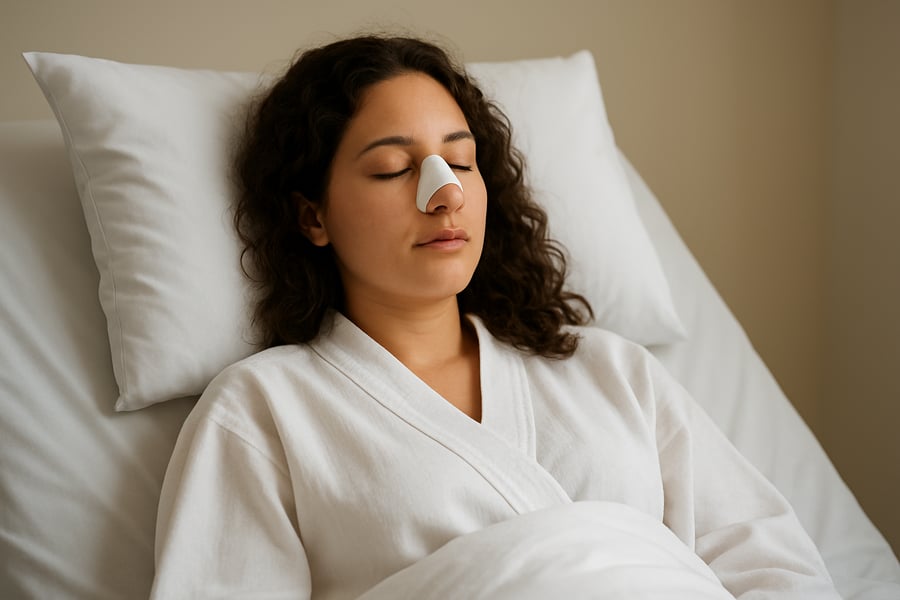
improving the head during sleep is the most effective strategy to manage postoperative edema following a nose job. By keeping the head positioned above the level of the heart, patients use gravity to help lymphatic drainage, which decreases fluid accumulation in the nasal tissues1. estethica Global recommends maintaining this upright posture for at least the first two to three weeks of the recovery period to ensure optimal healing results.
using multiple pillows or a specialized wedge cushion helps maintain an improve angle throughout the night. Many patients find that resting in a recliner chair provides superior stability compared to a standard bed, as it prevents the unconscious tendency to roll onto the side or stomach during sleep. Consistent adherence to these positioning guidelines is vital, as any pressure applied to the nasal structures during the initial healing phase can lead to discomfort or compromise the desired aesthetic outcome2.
Maintaining Recovery Hygiene
Keeping the nasal splint and surrounding area dry is essential during the early stages of recovery, even while adjusting to new sleep habits4. Patients should avoid touching the nose or disturbing the surgical dressings while shifting positions in bed. Following the post-op protocols provided by the medical team at estethica Global ensures that the recovery process remains efficient, allowing the body to dedicate its resources to effective tissue repair and the resolution of swelling3.
What to Expect During the Nasal Splint Removal Process
The removal of the nasal splint marks a important step in your rhinoplasty journey at estethica Global, typically occurring within the first week of your recovery. Keeping the splint dry during these initial days is vital for maintaining the integrity of the support structure while you heal at home4. Once the surgeon determines the underlying tissues have stabilized, the splint is carefully detached to reveal the preliminary contours of your nose.
Patients often experience a sense of immediate physical relief as the pressure from the external splint is released. While some individuals report mild sensitivity during the detachment, the process is generally quick and manageable without the need for extensive pain intervention2. Surgeons at estethica Global will use this time to clean the skin, remove any remaining sutures, and assess the progress of your healing process.
Managing Post-Removal Healing
Expect to see some residual swelling after the splint is removed, as it can take several months for the majority of edema to resolve1. using specific care protocols, such as gentle saline irrigations and activity modifications, helps ensure the best long-term aesthetic results2. Adhering to the personalized guidance provided by your plastic surgeon regarding skincare and the use of protective measures like eyewear is essential for protecting your nose as it refines into its final shape.

Clinical Protocols and Recovery Methodologies
Patient Evaluation and Process Transparency
Frequently Asked Questions
Who is not considered an ideal candidate for a nose job?
What steps should I take to prepare for a rhinoplasty procedure?
How should I position myself to sleep after a nose job?
Is it true that rhinoplasty results are permanent immediately after the cast is removed?
Are there non-surgical alternatives to a traditional nose job?

Ready for a Smooth Recovery Journey?
Don't leave your results to chance. Connect with our surgical team for personalized post-op guidance and professional insights.
References
Superscript numbers in the content correspond to the references listed below.
- Cleveland Clinic — Rhinoplasty (Nose Job): Surgery, Recovery, Before & After
- PubMed — Postoperative Care to Ensure Optimal Tip Rhinoplasty Results
- PubMed — Improving Postsurgical Management of Rhinoplasty: A thorough Review of Existing Literature
- University of Mississippi Medical Center — Postoperative Care of Rhinoplasty