


Learn about effective keloid scar treatment after plastic surgery. Explore prevention strategies, advanced revision techniques, and professional consultation options.
Keloid scar treatment after plastic surgery involves specialized dermatological protocols designed to manage abnormal collagen deposition at incision sites. Effective management often requires a combination of physical, pharmacological, and energy-based interventions to minimize tissue overgrowth and improve aesthetic outcomes. Understanding the underlying mechanisms of wound healing is essential for patients seeking to optimize their recovery process.
Understanding the Difference Between Hypertrophic Scars and Keloids
Distinguishing between scar types is a fundamental aspect of dermatological post-surgical management at estethica Global. While both conditions involve excessive collagen accumulation during the healing phase, their clinical behavior differs. Hypertrophic scars remain confined to the original wound boundaries and may naturally regress over time, whereas keloids represent a fibroproliferative disorder where tissue growth extends beyond the initial injury site and typically does not regress spontaneously1.
Microscopic examination reveals distinct patterns in collagen organization that help plastic surgeons determine the appropriate intervention. Hypertrophic scars often display a wavy, regular collagen arrangement, while keloids lack a distinct pattern and are characterized by disorganized collagen bundles1. Patients often report pruritus or localized pain associated with keloid formation, which can impact functional comfort and aesthetic outcomes after procedures like breast reduction surgery or rhinoplasty.
Early identification of scar pathology allows the team at estethica Global to implement targeted intervention strategies. Intralesional corticosteroid injections are often use as a first-line treatment, with studies showing significant recurrence-free resolutions when administered early in the postoperative period2. While laser therapy is frequently discussed in aesthetic medicine, current clinical evidence remains insufficient to fully support its routine effectiveness for all scar types3.
Comparison of Scar Management Modalities
| Name | Key Features | Pros | Cons |
|---|---|---|---|
| Corticosteroid Injections | Intralesional anti-inflammatory medication | High efficacy for keloids; reduces inflammation | Requires multiple sessions; potential skin thinning |
| Silicone Gel Sheets | Topical occlusive dressing | Non-invasive; hydrating properties | Requires consistent daily application |
| Laser Therapy | Light-based tissue remodeling | Targets vascularity; improves texture | Inconsistent clinical evidence; variable results |
| Surgical Revision | Excision of scar tissue | Immediate physical removal | High risk of recurrence if not paired with therapy |

Proactive Plastic Surgery Keloid Prevention Strategies
Preventing keloid formation starts with careful surgical planning, as these scars extend beyond the original wound boundaries and lack the organized collagen patterns found in typical healing1. Surgeons at estethica Global focus on reducing skin tension during closure, which lowers the risk of fibroblast overactivity and excessive collagen deposition. Precise incision placement and layered suturing techniques help maintain the structural integrity of the skin, preventing the mechanical stress that often triggers pathological scarring.
Early medical intervention provides the best defense against scar thickening, particularly in patients with a history of abnormal wound healing. Intralesional corticosteroid injections, such as triamcinolone, are frequently use shortly after wound closure to stabilize the inflammatory response, with studies showing high rates of recurrence-free resolution2. Combining these clinical injections with consistent home-care routines ensures that the skin remains hydrated and protected during the critical remodeling phase.
Post-Operative Care and Investment
Proactive management requires a sustained commitment to post-operative protocols, including the application of medical-grade silicone sheeting and specialized compression garments. These tools modulate the local environment of the scar, promoting a balanced extracellular matrix remodeling process. Patients choosing estethica Global benefit from personalized recovery plans that integrate these advanced preventative measures into their daily aesthetic medicine routine.
Effective Keloid Scar Treatment After Plastic Surgery
Keloids differ from hypertrophic scars because they extend beyond the original site of injury and fail to regress on their own1. Managing these lesions requires a targeted approach, as the irregular collagen patterns found in keloid tissue demand specialized intervention to prevent further proliferation. Intralesional corticosteroid injections serve as a primary treatment modality, effectively inhibiting fibroblast activity and modulating collagen synthesis to flatten the scar2.
Clinical protocols often involve a combination of therapies to address the unique size and location of the scar. While cryotherapy provides localized tissue destruction for smaller lesions, other methods are selected based on the patient’s specific healing profile and aesthetic goals. Because the efficacy of laser therapy remains a subject of ongoing clinical debate, clinicians prioritize established evidence-based procedures to ensure patient safety and optimal outcomes3.
Professional Consultation and Care
Consistent medical supervision is essential for monitoring the maturation of the scar and making necessary adjustments to the treatment plan. Patients undergoing procedures such as breast reduction surgery, tummy tucks, or other forms of cosmetic surgery should engage in early postoperative follow-ups to detect signs of pathological scarring. estethica Global provides a structured assessment process, allowing patients to consult with experts who specialize in managing complex scar tissue according to modern medical standards.
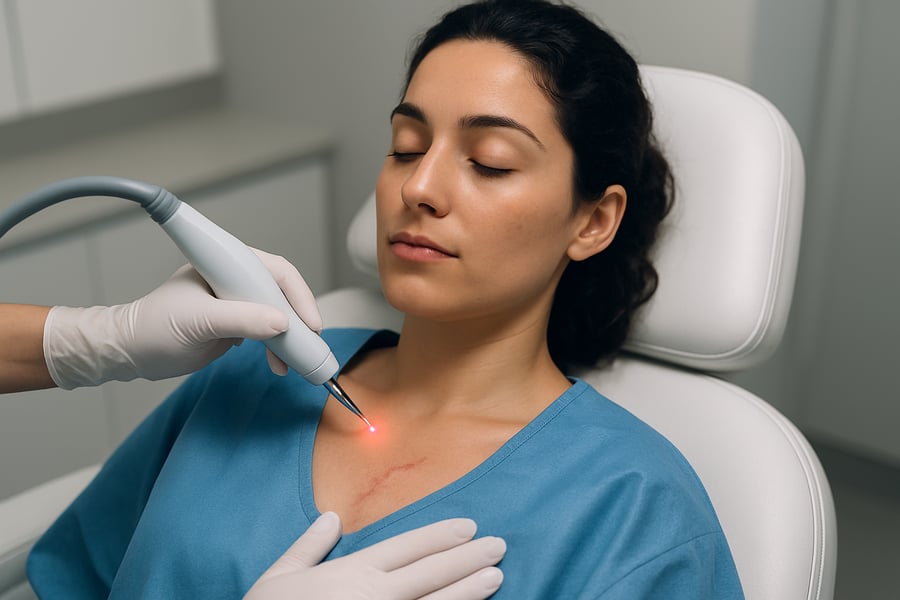
Advanced Laser and Injection Techniques for Scar Revision
Modern scar management at estethica Global focuses on energy-based devices that address both the texture and vascularity of problematic tissue. Pulsed dye lasers target vascular endothelial growth factor (VEGF) to reduce the blood supply that often fuels persistent keloid growth. While scientific literature notes that evidence for laser therapy remains evolving3, many specialists integrate these devices alongside chemical interventions to achieve more thorough aesthetic results.
Intralesional corticosteroid injections represent a standard first-line intervention for managing keloid and hypertrophic scars. Administering triamcinolone directly into the scar tissue shortly after wound closure can reduce the likelihood of recurrence2. Practitioners at estethica Global tailor the concentration of these injections to the specific density of the scar, ensuring a precise approach to extracellular matrix remodeling.
Optimizing Tissue Remodeling
The biological goal of combining these advanced modalities is to induce apoptosis in keloid-derived fibroblasts and normalize the underlying tissue structure. Unlike hypertrophic scars that remain contained within the injury site, keloids expand beyond initial borders, requiring aggressive and early clinical intervention to manage their irregular collagen patterns1. A personalized treatment protocol, developed through expert evaluation, ensures that the intensity of laser and injection therapy match the patient's unique healing profile to optimize the final appearance.
Scheduling Your Estethica Global Keloid Removal Consultation
Managing keloid scars requires a precise medical evaluation because keloids grow beyond the original injury site, unlike hypertrophic scars which remain contained1. estethica Global specialists perform a thorough diagnostic review to determine the most effective path for revision, as the lack of a distinct collagen pattern in keloids often necessitates specialized intervention1. During your initial appointment, the clinical team assesses the scar's maturation stage to ensure that the chosen treatment match your specific physiological profile.
Intralesional corticosteroid injections frequently serve as the primary management strategy for these complex tissue responses2. By using standardized protocols such as triamcinolone, estethica Global aims to achieve high recurrence-free resolution rates for patients2. Each consultation focuses on setting realistic expectations for the outcome of these procedures, providing a clear roadmap for recovery and long-term dermatological health.
Clinical Excellence and Patient Care
Modern aesthetic medicine relies on evidence-based practices to address post-surgical complications like keloid formation. While some patients inquire about laser therapy, current scientific literature indicates that evidence for its effectiveness in treating keloids remains insufficient3. estethica Global maintains a commitment to transparency by prioritizing proven clinical methods and continuous monitoring, ensuring that every patient receives professional guidance tailored to their unique needs and medical history.

Clinical Management of Keloid Scars
Patient Evaluation and Recovery Expectations
Frequently Asked Questions
Who is not a suitable candidate for keloid scar treatment after plastic surgery?
What steps can patients take for plastic surgery keloid prevention before their scheduled procedure?
Is it true that preventing keloid formation after rhinoplasty requires specific post-operative activity restrictions?
How does an estethica global keloid scar consultation differ from a standard post-operative checkup?
What is the primary difference between a hypertrophic scar and a keloid scar?

Manage Your Recovery with Expert Guidance
Understand your options for effective keloid scar management from our specialized surgical team.
References
Superscript numbers in the content correspond to the references listed below.
- NIH — Hypertrophic Scarring Keloids - StatPearls - NCBI Bookshelf
- NIH — Minimal-Invasive Technologies for Treatment of HTS and Keloids: Corticosteroids - Textbook on Scar Management - NCBI
- NIH — Laser therapy for treating hypertrophic and keloid scars - PMC