

Learn how to treat a keloid effectively with professional aesthetic medicine. Explore non-surgical options, injection therapies, and expert care at estethica Global.
How to treat a keloid involves using specialized dermatological interventions to manage abnormal collagen deposition and reduce scar tissue prominence. Modern aesthetic medicine offers various non-surgical and surgical options to address these challenging skin lesions effectively. Understanding the underlying mechanisms of scar formation is essential for selecting the most appropriate therapeutic pathway for individual needs.
Understanding Keloid Formation and Characteristics
Keloids represent a complex dermatological pathology where scar tissue grows aggressively beyond the boundaries of an initial injury site. Unlike typical wound healing, where collagen deposition stabilizes, keloids exhibit persistent fibroblast proliferation and an over-accumulation of extracellular matrix components1. Genetic predisposition matters in this process, often leading to raised, firm lesions that do not regress spontaneously over time.
Clinical management at estethica Global focuses on addressing the specific biological behavior of these scars, which often involve chronic inflammation and sensitivity. Patients frequently report pruritus or physical discomfort, necessitating professional intervention to prevent further expansion of the tissue. International guidelines prioritize multimodal treatment plans, often combining intralesional corticosteroid injections with advanced surface therapies to manage the underlying collagen dysregulation2.
The following table details key clinical features and the corresponding value provided by specialized aesthetic care for those seeking to treat a keloid:
Clinical Management Strategies
Effective treatment often requires a combination of therapies to ensure the best aesthetic outcomes. Current literature supports the use of silicone gel or sheeting paired with corticosteroid injections as a standard first-line approach for managing keloid lesions3. For recalcitrant cases, experts at estethica Global may evaluate the necessity of surgical excision followed by immediate radiation therapy to minimize the risk of recurrence.
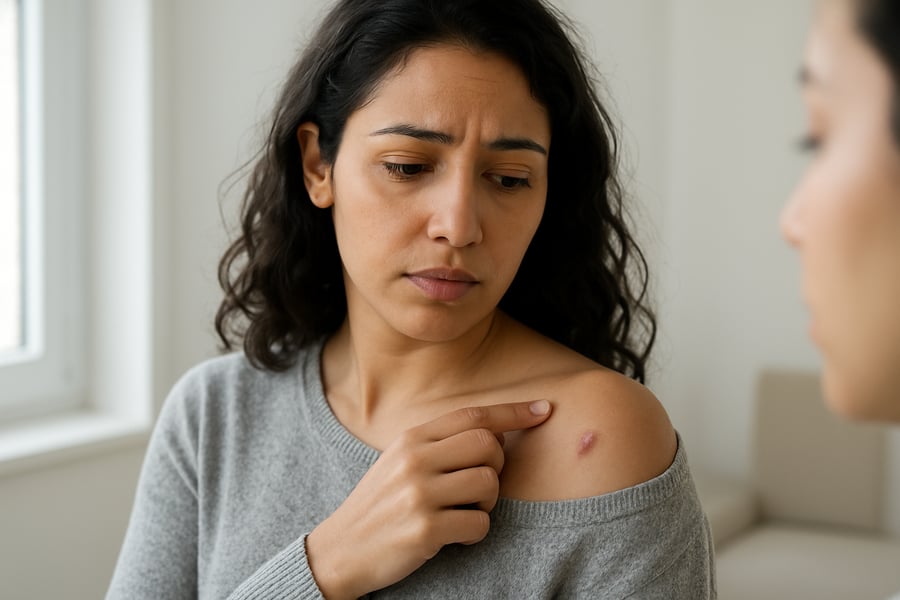
Top Aesthetic Medicine Procedures for Keloid Reduction
Aesthetic medicine for keloid reduction centers on inhibiting fibroblast proliferation and modulating the inflammatory response within the scar tissue. Intralesional corticosteroid injections serve as the primary clinical intervention, effectively suppressing collagen synthesis and promoting the gradual flattening of lesions2. estethica Global specialists typically administer these treatments in monthly intervals over several months to ensure controlled tissue regression4.
Silicone-based therapies represent a non-invasive pillar of scar management, often use to hydrate the area and improve overall tissue elasticity. Research indicates that the consistent application of silicone gel or specialized sheeting, particularly when paired with corticosteroid injections, enhances the aesthetic outcome for both new and mature keloids3. Patients may experience up to 90% improvement in scar appearance when adhering to these standardized clinical protocols2.
Advanced Therapeutic Modalities
Laser technology and cryotherapy provide targeted solutions for recalcitrant lesions that fail to respond to standard injections. Pulsed-dye lasers specifically address the vascular components of keloids by reducing redness, while cryotherapy use extreme cold to physically disrupt the dense collagen structure of the scar. For complex cases, estethica Global professionals frequently recommend surgical excision combined with immediate post-operative radiation therapy to minimize the risk of recurrence and achieve smoother skin texture3.
Professional Keloid Removal Services at Estethica Global
estethica Global addresses keloids by recognizing their tendency to grow beyond the original wound boundaries, requiring specialized medical intervention rather than standard scar care1. The clinical team performs thorough evaluations to determine whether a patient requires intralesional corticosteroid injections, which serve as the primary evidence-based therapy for managing these lesions2.
Precision is maintained throughout the treatment process, often combining silicone gel applications with steroid injections to maximize clinical outcomes3. For recalcitrant lesions that fail to respond to initial protocols, estethica Global offers surgical excision often paired with immediate adjuvant therapies to prevent recurrence and ensure long-term aesthetic improvement.
Personalized Care and Recovery
Patients receive tailored recovery plans that may include compression dressings, a proven method for flattening new keloid scars effectively4. Specialists at estethica Global monitor the healing trajectory closely, adjusting the frequency of monthly steroid injections to achieve the best possible skin texture and contour for every guest.
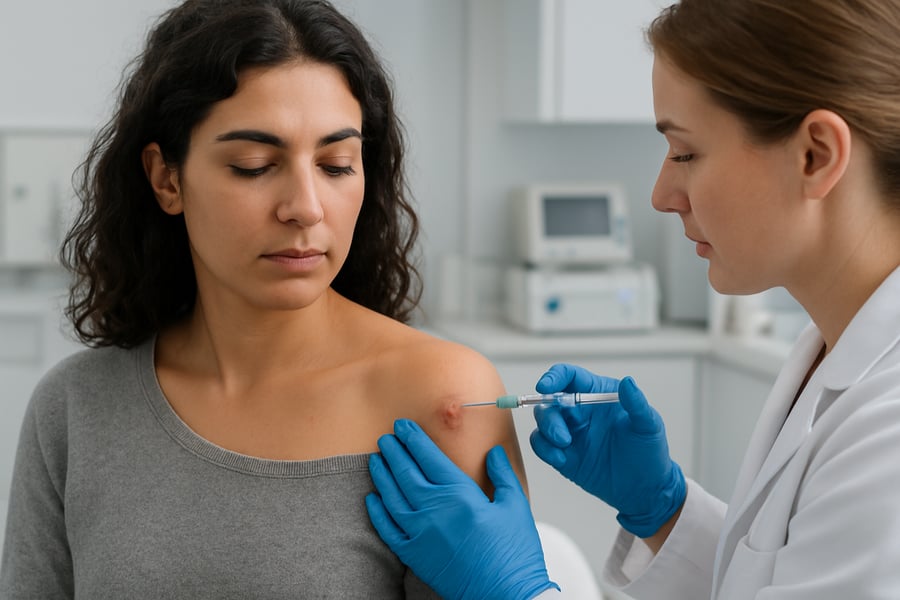
Non-Surgical Treatment Options and Injection Therapies
Intralesional corticosteroid injections, such as triamcinolone acetonide, serve as the primary clinical intervention for managing keloid tissue. By inhibiting the production of transforming growth factor-beta, these injections effectively reduce collagen synthesis and flatten the raised scar surface2. Patients typically undergo a series of monthly sessions to achieve optimal cosmetic outcomes, a standard practice often managed at centers like estethica Global 4.
Silicone gel sheeting and specialized dressings provide a non-invasive, highly effective approach to scar management. These materials maintain skin hydration and exert consistent pressure, which research suggests can lead to a 90% improvement in the appearance of keloid scars2. Combining these topical solutions with professional guidance from a plastic surgeon ensures that the treatment plan is tailored to the specific size and location of the lesion3.
Compression and Adjunctive Care
Compression therapy use custom garments or specialized dressings to apply steady mechanical force to the affected area. This physical pressure helps reorganize collagen fibers and prevents the overgrowth of scar tissue, making it a reliable method for those seeking to avoid surgery4. While these methods are often use as standalone therapies for minor keloids, they frequently complement more intensive procedures in thorough care protocols at estethica Global.
Post-Treatment Care and Long-Term Scar Management
Effective management of a keloid requires a commitment to post-procedural protocols to prevent the excessive tissue growth that characterizes these scars1. estethica Global specialists emphasize that patients should use silicone gel or sheeting consistently, as these methods have shown up to 90% improvement in scar appearance when used as part of a long-term strategy2. Protecting the site from direct ultraviolet radiation is equally vital, as sun exposure can lead to lasting hyperpigmentation that complicates the aesthetic outcome.
Compression therapy often is a foundational component for new keloid scars, providing the necessary pressure to flatten and soften the tissue over time4. Patients treated at estethica Global may receive a combination regimen, as current clinical literature supports the integration of silicone dressings alongside intralesional corticosteroid injections to achieve the most stable results3. Adhering to this structured approach reduces the likelihood of recurrence for recalcitrant lesions.
Monitoring and Follow-Up Schedules
Regular check-ups at estethica Global allow medical professionals to track the remodeling phase of the skin and adjust treatment intensity based on individual healing rates. Since steroid injections often require monthly sessions for up to six months, maintaining these appointments is essential for successfully managing the scar's volume and texture4. Consistent clinical oversight ensures that any signs of early regrowth are addressed immediately with advanced options, such as post-excision radiation therapy for more stubborn cases3.
Clinical Evaluation and Technical Approaches
Patient Assessment and Realistic Expectations
Frequently Asked Questions
Who is not considered an ideal candidate for aesthetic medicine for keloid reduction?
What preparation steps are required before starting non-surgical keloid treatment procedures?
How long is the typical recovery period following a professional intervention to treat a keloid?
Is it true that aesthetic skin rejuvenation can completely erase a keloid scar?
What is the primary difference between keloid scars and hypertrophic scars?

Not sure which keloid treatment is right for you?
Connect with our dermatological team to discuss safe and effective options for your skin.
References
Superscript numbers in the content correspond to the references listed below.
- PubMed — Hypertrophic scars and keloids: Overview of the evidence and practical guide for differentiating between these abnormal scars
- PMC (National Institutes of Health) — Management of keloid scars: noninvasive and invasive treatments
- PMC (National Institutes of Health) — Keloid treatments: an evidence-based systematic review of recent advances
- Mayo Clinic — Keloid scar - Diagnosis and treatment - Mayo Clinic