


Learn about deviated septum surgery, including the septoplasty procedure, recovery time, and benefits for breathing improvement. Consult experts for guidance.
Deviated septum surgery, also known as septoplasty, is a functional procedure designed to straighten the nasal septum and improve airflow. This intervention addresses structural irregularities within the nasal cavity to alleviate chronic obstruction and enhance overall respiratory quality. Understanding the nuances of this procedure helps patients make informed decisions regarding their nasal health.
Understanding the Septoplasty Procedure for Nasal Airway Obstruction
The nasal septum consists of a delicate wall of cartilage and bone that divides the nasal cavity into two distinct nostrils. When this structure becomes displaced, it creates a physical barrier that restricts airflow, often resulting in chronic congestion and a reliance on mouth breathing. Septoplasty functions as a corrective intervention designed to reposition this wall to the midline, thereby optimizing nasal ventilation and improving overall quality of life for patients5.
Surgeons at estethica Global perform this procedure through an endonasal approach, ensuring that all incisions remain hidden inside the nostril to prevent any visible external scarring. During the surgery, the mucoperichondrial flap is carefully lifted to expose the underlying framework, allowing the specialist to trim or reshape the deviated portions of the quadrangular cartilage and the vomer or ethmoid bone. Modern techniques, such as endoscopic septoplasty, provide superior visualization of the nasal anatomy, which reduces the incidence of mucosal tearing and minimizes post-operative complications2.
Clinical evidence summarizes that surgical correction offers greater long-term relief for nasal obstruction compared to conservative medical management, such as the use of steroid or saline sprays3. While initial recovery typically requires one to two weeks, the structural healing of the nasal framework continues for several months following the operation1. Patients choosing to undergo this procedure at estethica Global benefit from a focused, functional approach that addresses mechanical blockages while maintaining the aesthetic integrity of the nose.

Is Septoplasty Necessary for Your Deviated Septum?
Deciding on surgical intervention requires a careful assessment of how nasal obstruction affects your daily life and overall health. While many individuals possess minor septal deviations without noticeable symptoms, clinical evidence indicates that septoplasty is a highly effective treatment for those suffering from chronic airway blockage3. Specialists at estethica Global often prioritize this procedure when patients experience recurrent sinus infections, persistent mouth breathing, or significant sleep disturbances that do not respond to conservative medical management.
Non-surgical alternatives, such as saline rinses and nasal steroid sprays, serve as the first line of defense for managing mild congestion. When these treatments fail to provide adequate relief, surgery becomes the most direct path to long-term improvement, as confirmed by studies showing that adults who undergo septoplasty experience a higher quality of life compared to those relying on medical management alone4. Nasal septoplasty remains one of the most frequently performed functional procedures in plastic surgery, specifically targeted at correcting anatomical irregularities that hinder airflow5.
Modern surgical techniques, particularly endoscopic septoplasty, offer improved precision and reduced recovery complications compared to traditional methods2. During a consultation at estethica Global, a surgeon will perform a thorough physical examination, potentially using an endoscope to visualize internal structures and confirm if the deviation is the primary cause of your breathing difficulties. Understanding the expected recovery timeline is also essential, as initial healing typically spans one to two weeks, though full stabilization of the bone and cartilage continues for several months1.
Expected Recovery Time and Post-Operative Care
Recovery following a septoplasty procedure at estethica Global is a gradual process that requires patience and strict adherence to post-operative instructions. Most patients return to light daily activities within one to two weeks, although the internal bone and cartilage structures continue to stabilize for several months1. Clinical evidence indicates that surgical intervention provides significant long-term improvements in quality of life compared to non-surgical alternatives for those suffering from chronic nasal obstruction4.
Immediate post-operative care focuses on managing mild swelling, congestion, and minor discomfort through prescribed saline sprays and keeping the head improve during sleep. Surgeons often place splints or internal packing to support the septum, which are typically removed during a follow-up visit to ensure the nasal passages remain clear as tissues heal5. Patients must avoid strenuous physical activity, heavy lifting, and forceful nose blowing to prevent complications like bleeding or infection during the initial recovery phase4.
Long-term Healing and Monitoring
Regular follow-up appointments with the medical team at estethica Global allow for continuous monitoring of the nasal airway and overall healing progress. Studies confirm that septoplasty is a highly effective treatment for nasal obstruction, often yielding superior symptom relief compared to medical management alone3. Consistent communication with your surgeon ensures that any minor issues are addressed promptly, allowing the patient to enjoy the full functional benefits of the surgery for years to come4.
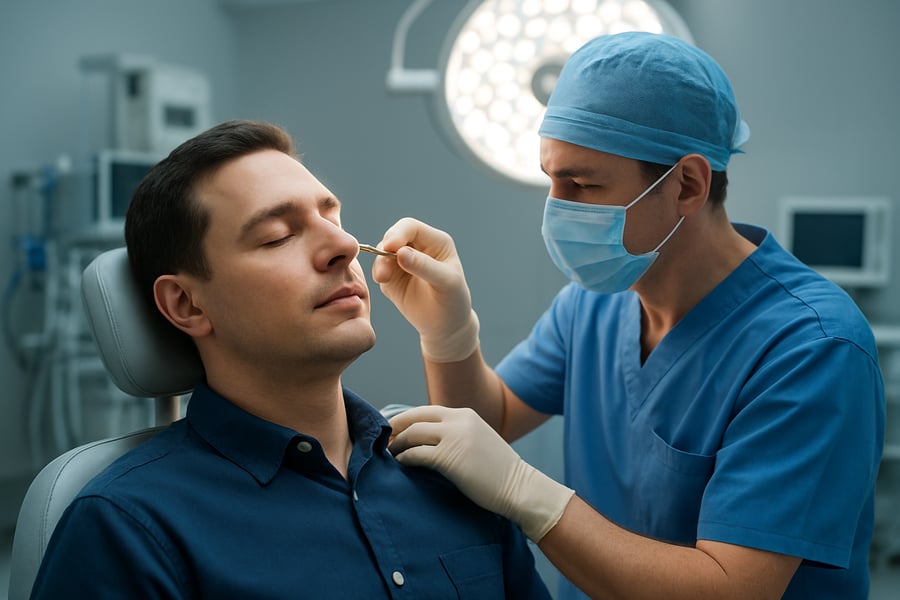
Comparing Septoplasty vs Rhinoplasty for Breathing Improvement
Septoplasty is a highly effective functional treatment for nasal obstruction caused by a deviated septum, yielding significant quality-of-life improvements that often persist for years4. Clinical studies summarizes that patients undergoing this procedure report substantially greater symptom relief compared to those relying solely on medical management like nasal steroids or saline sprays3. Specialized approaches, such as endoscopic septoplasty, further enhance these outcomes by reducing the incidence of mucosal tearing and improving the overall precision of the correction2.
Rhinoplasty differs from septoplasty by primarily addressing the aesthetic architecture of the nose, though it is frequently combined with internal corrections to improve airflow in cases of structural valve collapse. Surgeons at estethica Global evaluate the nasal anatomy to determine whether a patient requires simple septal realignment or a more thorough structural modification. Recovery timelines for these procedures typically span several weeks for initial healing, with long-term stabilization of bone and cartilage tissue continuing for several months1.
Surgical Procedure Comparison
Choosing between these interventions depends on whether the primary airway restriction stems from a deviated septum or a collapsed external valve. Specialists at estethica Global provide a thorough consultation to identify the specific anatomical barriers affecting your breathing, ensuring that the chosen surgical plan match your long-term health objectives5. Patients seeking to address both cosmetic concerns and functional difficulties often find that a combined approach offers the most balanced results.
Why Patients Choose Estethica Global for Septal Deviation Repair
estethica Global provides specialized care for patients suffering from symptomatic nasal airway obstruction, a condition where septoplasty is a primary functional solution5. The clinical team use advanced endoscopic techniques, which improve symptom relief scores and reduce the incidence of mucosal tearing compared to traditional surgical approaches2. By focusing on the precise anatomical correction of the nasal septum, estethica Global ensures that patients achieve long-term improvements in their quality of life4.
Modern diagnostic protocols at estethica Global allow surgeons to tailor every procedure to the specific structural requirements of the patient. This methodical approach to deviated septum surgery is supported by a multidisciplinary team capable of addressing complex cases that may involve both functional and aesthetic concerns. Because septoplasty is a clinically effective treatment for persistent obstruction, the expertise available at estethica Global helps patients navigate the transition from initial consultation to full recovery with confidence3.
Patient safety remains the central pillar of the surgical experience at estethica Global, where clinical protocols are designed to minimize risks such as bleeding and infection4. The recovery timeline is managed through thorough post-operative support, acknowledging that while initial healing occurs within one to two weeks, the final stabilization of cartilage and bone structure requires several months of monitoring1. By maintaining high standards of care in a cosmopolitan setting, estethica Global remains a preferred choice for individuals seeking permanent relief from nasal breathing difficulties.

Surgical Methodology and Technical Implementation
Post-Operative Care and Recovery Management
Frequently Asked Questions
What is the primary difference between septoplasty vs rhinoplasty for breathing?
Who is generally not considered a suitable candidate for deviated septum surgery?
How long does the recovery period typically last following a septoplasty procedure?
Is it true that nasal septum correction will permanently cure all snoring issues?
What specific precautions should be taken before undergoing deviated septum surgery?

Ready to Breathe Better?
Discover if septoplasty is the right solution for your breathing challenges.
References
Superscript numbers in the content correspond to the references listed below.
- Cleveland Clinic — Septoplasty: Procedure & Recovery
- PubMed — Efficacy and safety of endoscopic septoplasty for treating nasal septal deviations compared with conventional septoplasty: A systematic review and meta-analysis
- The BMJ — Clinical effectiveness of septoplasty versus medical management for nasal airways obstruction: multicentre, open label, randomised controlled trial
- NIHR Evidence — Surgery for a deviated nasal septum improves quality of life more than non-surgical approaches
- NCBI Bookshelf (NIH) — Septoplasty - StatPearls